
Five Reasons to End Strip Searching in Prisons
First, strip searching is an unnecessary and ineffective practice
Lawmakers across Australia purport to justify the practice of strip searching as necessary to prevent contraband from entering prisons and to ensure the ‘security and good order’ of prisons.
Data and a mounting body of evidence demonstrates, however, that strip searching does not serve either of these ends. The practice is unnecessary, ineffective and rarely identifies items, let alone dangerous items.
It does not serve a deterrent effect, nor does reduced rates of strip searching lead to an increase in contraband in prisons.
“Given issues with prison guards recording strip searches accurately - or sometimes not at all - it’s notable that the data - which, to me, represents the best-case scenario and likely omits many strip searches that have taken place - still confirms that strip searches are excessive and ineffective.”
— Stacey Stokes, FIGJAM
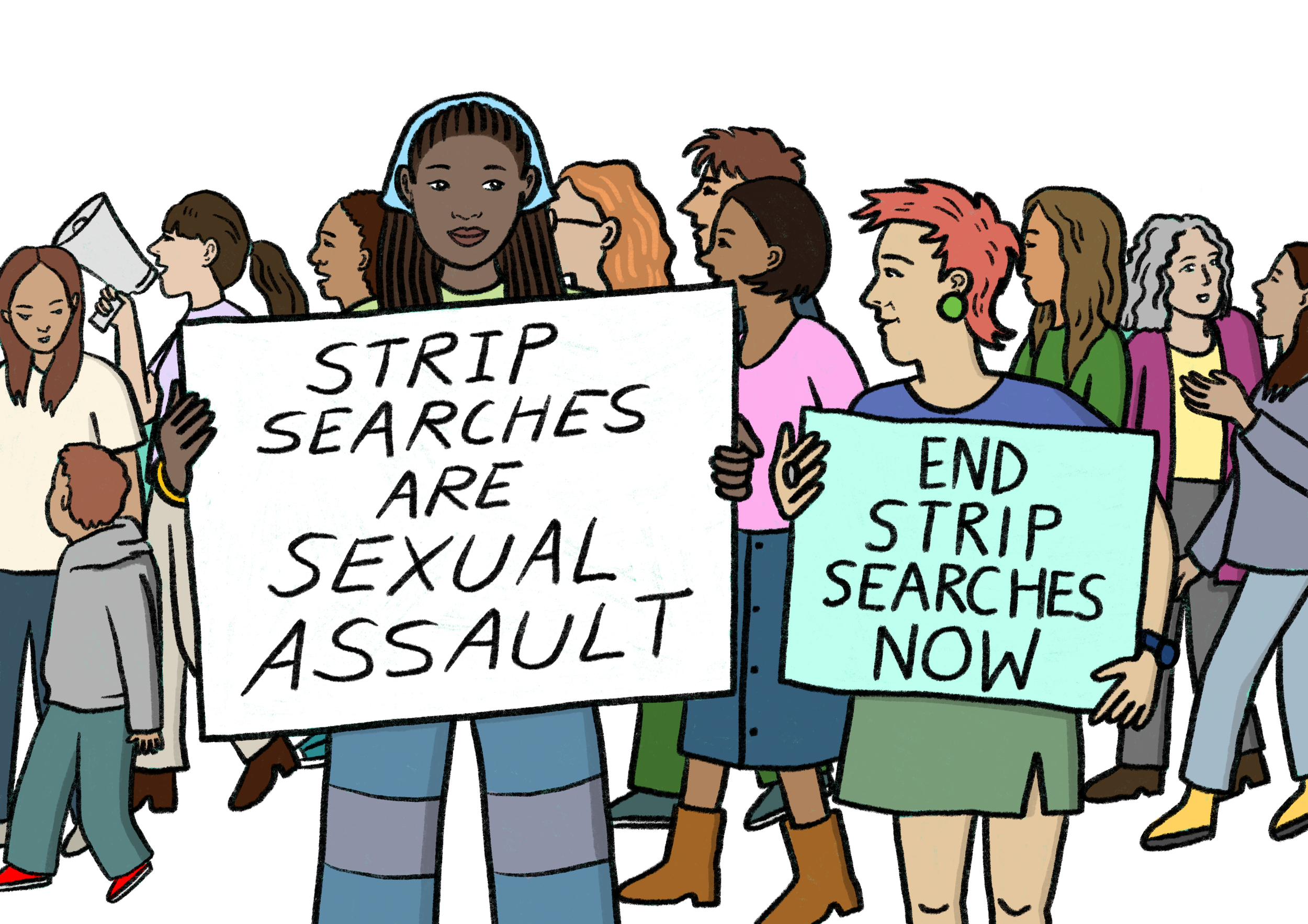
Second, strip searching amounts to state-perpetrated violence
Outside prison walls, if prison guards forced people to strip and submit to inspections of their bodies, these actions would be recognised as sexual crimes.
Yet, governments continue to authorise and normalise the strip searching of people in prison. This is consistent with years of advocacy by lived experience advocates calling out strip searching for what it is: sexual abuse at the hands of the state.
It is abuse that mimics violence by partners and others, and has been described as akin to “being raped” and being “officially abused.”
“The first time I was incarcerated, I was escorted to a room which was dark and cold. I was told to undress. I am a survivor of violence, including sexual assault. I felt violated and abused and began to sob.”
— Nina, FIGJAM
Third, strip searching disproportionately harms over-incarcerated communities
Strip searching causes disproportionate trauma to Aboriginal and Torres Strait Islander peoples, women, trans and gender diverse people and children in prison.
It amounts to racial and gendered violence, as well as child abuse.
For Aboriginal and Torres Strait Islander peoples in prison, the horrific harms of strip searching are compounded by their mass incarceration and the already discriminatory treatment they are subjected to in prison.

“Prison guards have a huge amount of power to decide who gets strip searched. There is definitely racism at play inside prison, and I think some guards target Aboriginal people ...”
— Jana, FIGJAM
Fourth, strip searching breaches human rights
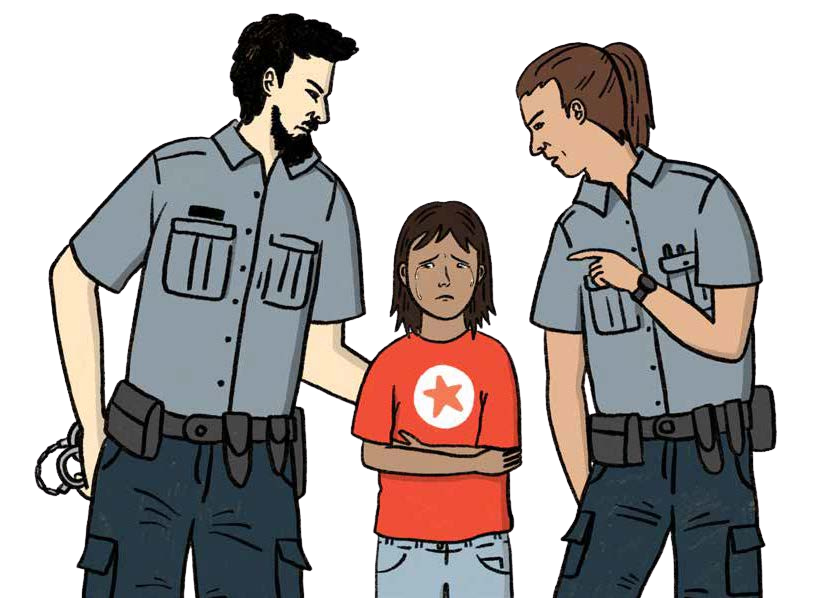
Strip searches can constitute ill-treatment when conducted in a disproportionate, humiliating or discriminatory way, and can even amount to torture.
International human rights standards set the bare minimum protections for people in prison, and are clear that strip searching should only ever be undertaken if ‘absolutely necessary.’ Strip searches cannot be said to be ‘absolutely necessary’ as less invasive search alternatives are available.
Children are being forced to strip naked in front of adult prison guards. In most Australian jurisdictions, children as young as ten are incarcerated and can be subjected to strip searching.
In youth prisons in New South Wales and Queensland, children continue to be strip searched as a matter of prison routine. Based on data covering varying periods in 2021-2022, it is estimated that children were subjected to more than 300 strip searches each month in prisons across seven Australian jurisdictions.
In the month of April 2022 alone, 127 recorded strip searches were conducted on children at two New South Wales youth prisons. Only three of these searches identified items, most of which were not dangerous items.
“They talk about the safety of people in prison, but strip searches destroy that. We’re treated without trust or dignity, and when we’re released, we carry that damage with us, expecting the world to judge and mistreat us the same way.”
— Mon, FIGJAM
Finally, there are safer and less invasive alternatives to strip searching
There is no reason for governments to subject people in prison to a practice that can scar them for life when prison authorities can use less intrusive and more effective alternatives, like scanners similar to those used at airports and public buildings across the country.

“Nobody can give an answer as to why strip searching needs to be done. In this day and age, there are less invasive scanners that do the job. There isn’t any empathy for what it feels like when you’re strip searched. If there was, everyone would know and accept that there is no reason to put anyone through a strip search.”
— Cathy Campesato, FIGJAM