
End Strip Searching
Every day, people in prisons across Australia are subjected to strip searching.
It is an unnecessary, degrading and deeply harmful practice that must end. It involves a person literally being stripped of their dignity – forced to remove their clothing for their bodies to be inspected by prison guards, being forced to submit to humiliating requests like bending, squatting and spreading their legs. In many prisons, people are subjected to this repeatedly and routinely.
We are calling on the Federal Government to stop state-sanctioned violence by ending the routine, unregulated use of strip searching in prisons across Australia.
Together, we can demand a system that upholds dignity, safety, and human rights.
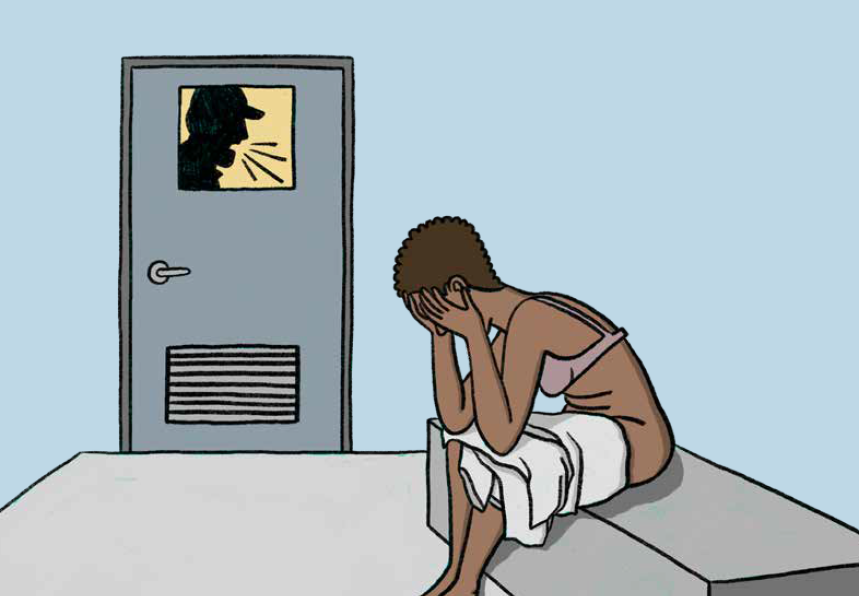
“I was last incarcerated decades ago. Now, years later, I support other formerly incarcerated women, and it’s devastating that the prison system continues to inflict the violence of strip searching. Even talking about the practice brings up things you have buried – strip searching is not something you get over.”
Stacey Nolan, FIGJAM
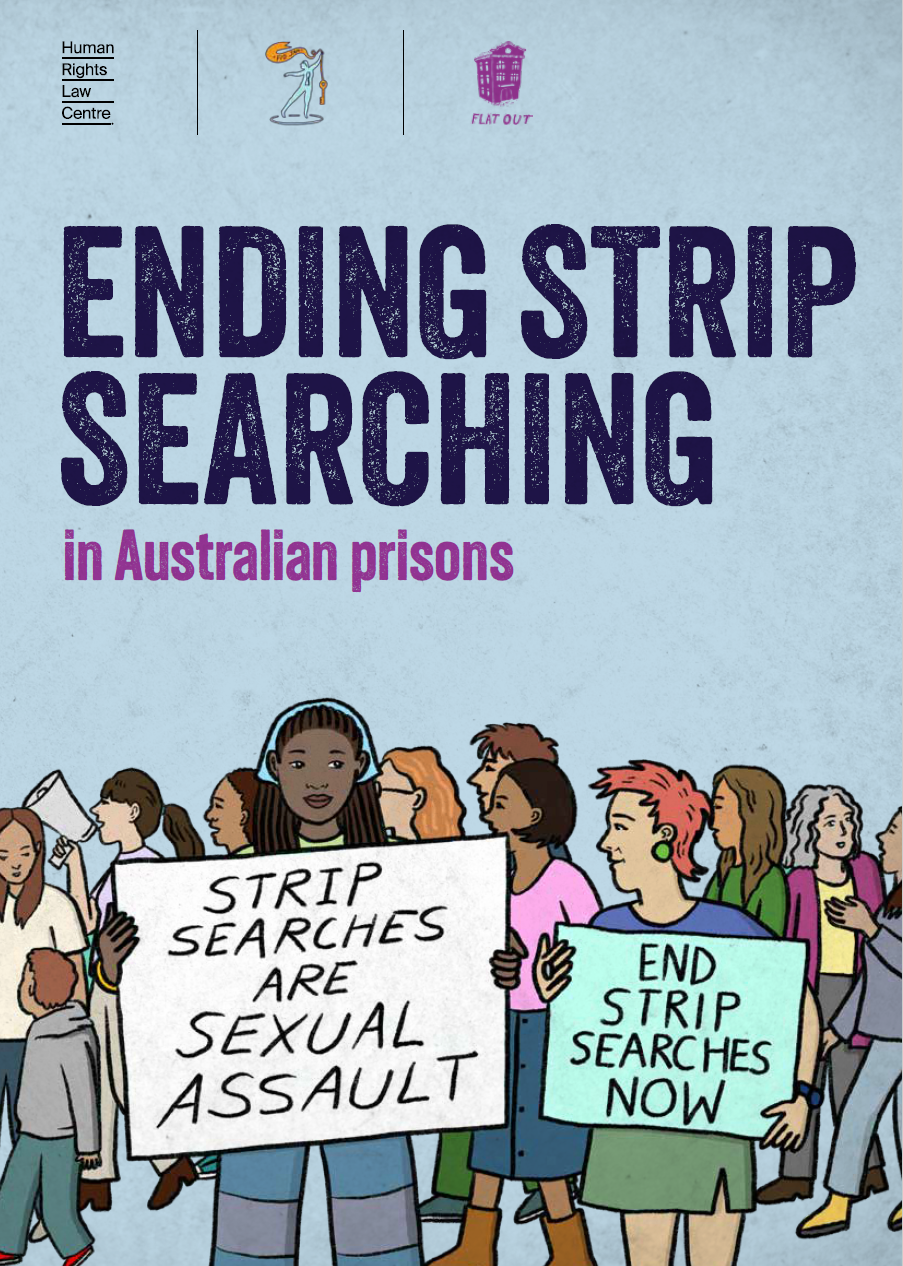
The Report: Ending Strip Searching in Australian Prisons
This report is based on:
Contributions from formerly incarcerated people and members of the FIGJAM collective of formerly incarcerated women, trans and gender diverse people.
A literature review, focusing on the use of strip searching in prisons in Australia.
Information obtained via a series of freedom of information requests made by the Human Rights Law Centre to the agencies responsible for the operation of adult and youth prisons in each Australian state and territory.
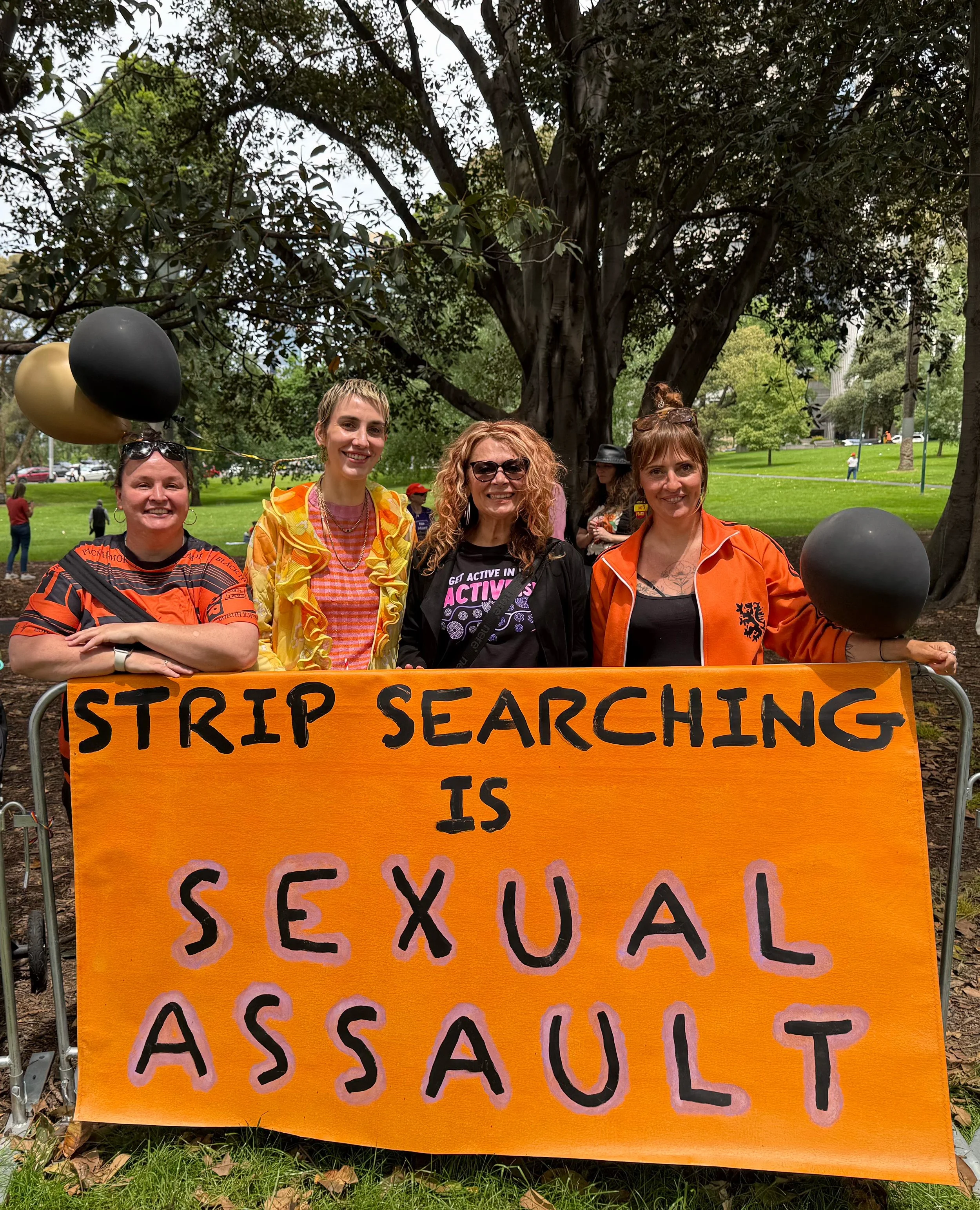
Key recommendations to end strip searching in Australia
We are calling on the Federal Government to:
Ban strip searching in law: in recognition of the unnecessary, degrading and deeply harmful nature of the practice, all state and territory governments should immediately ban strip searches in Australian prisons in law.
Regulate alternatives to strip searching: abuse thrives behind prison walls and, to protect against this, all state and territory governments should enact law reform to prescribe that the use of scanners and other alternative search methods only ever be used as a last resort in cases of absolute necessity, after less intrusive alternatives have already been exhausted and there remain objectively reasonable grounds to believe that a person is carrying specified, dangerous contraband.
Support people and communities, not prisons: instead of expanding the prisons system and putting more people at risk of being subjected to cruel and degrading practices like strip searches, all state and territory governments should build up the community supports required to divert people away from prisons.
Key Findings
Strip searches are unnecessary and ineffective, rarely identifying dangerous items.
Through the voices of lived experience experts we understand the violence and abuse of a strip search. There is no evidence of any relationship between strip searching and contraband detection.
Despite the availability of alternatives and the introduction of measures intended to curb the excessive use of strip searching in prisons, the practice has persisted.
This can be seen in Victoria where the use of alternatives has seen a reduction in strip searches, but too many women are still being strip searched too often.
Hundreds of strip searches can result in no items being identified.
For example, in Victoria in the month of April 2022, 221 recorded strip searches were conducted on women at the Dame Phyllis Frost Centre with zero items found.
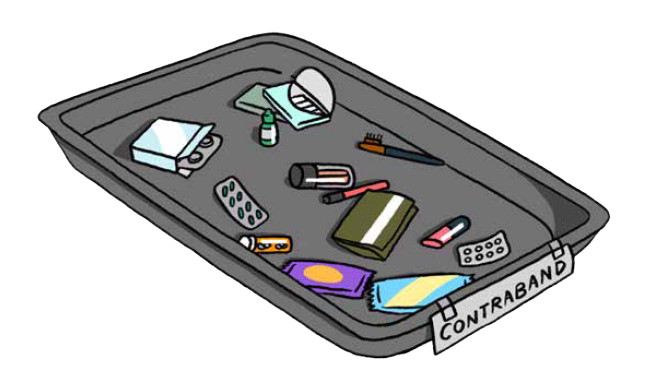
The ends do not justify the means.
In cases where items are identified as a result of strip searches, they are often not ‘dangerous’ and could have been identified through the use of less invasive alternatives. When items have been identified in previous Victorian data sets, they have included minor items like cigarettes and chewing gum.
There is a crisis of secrecy in prisons.
Transparency and recording the number of strip searches, and the reasons for them, are bare minimum safeguards that are often not being met by prison authorities. While registers are kept in Victorian prisons, they are often challenging to interpret because of incomplete and/or unclear record keeping.
“They’re sexually abusing us by strip searching us – making us do all sorts of poses. It’s really degrading and humiliating.”
— Zoe, FIGJAM
The End Strip Searching Campaign is supported by


















































If you wish to support the campaign, please email your logo to: figjamunited@gmail.com
Who We Are
Flat Out
Flat Out is a state-wide advocacy and support service for women, trans and gender diverse people (and their children) who have been criminalised. We are an independent, not for profit, community-based organisation that aims to prevent women and trans and gender-diverse people from entering and returning to prison.
FIGJAM
Formally Incarcerated Girls Justice Advocates Melbourne (FIGJAM) is a collective of formerly incarcerated women, trans and gender diverse folks who live work and play across so called Victoria. FIGJAM was founded in the hope and dream of building a community of staunch advocates providing connection, support and stability to its members.